

Big Boxes, Thin Margins — Inside the Collapse of ACFS Port Logistics
By Steven Ballerini | CEO of Australasian Supply Chain & Logistics Association (ASCLA)
Every so often a name falls that stops the sector mid-sentence. This month it was ACFS Port Logistics — the country’s largest privately owned container logistics operator, a business built over two decades to a half billion-dollar scale — placed into administration on 6 August. For the retailers whose stock it moves and the ports it feeds, it is a live supply-chain event. For those of us who work this trade for a living, it is something closer to a mirror.
Because ACFS did not fail at the fringes. It failed at the very centre of the container business, doing the work most of our members would recognise, at a scale almost none of us will ever reach. That is exactly why it deserves our attention. When a business this large comes undone, the useful question is never only what happened to them. It is what their unravelling tells the rest of us about the ground we all stand on.
The Scale of What Just Failed
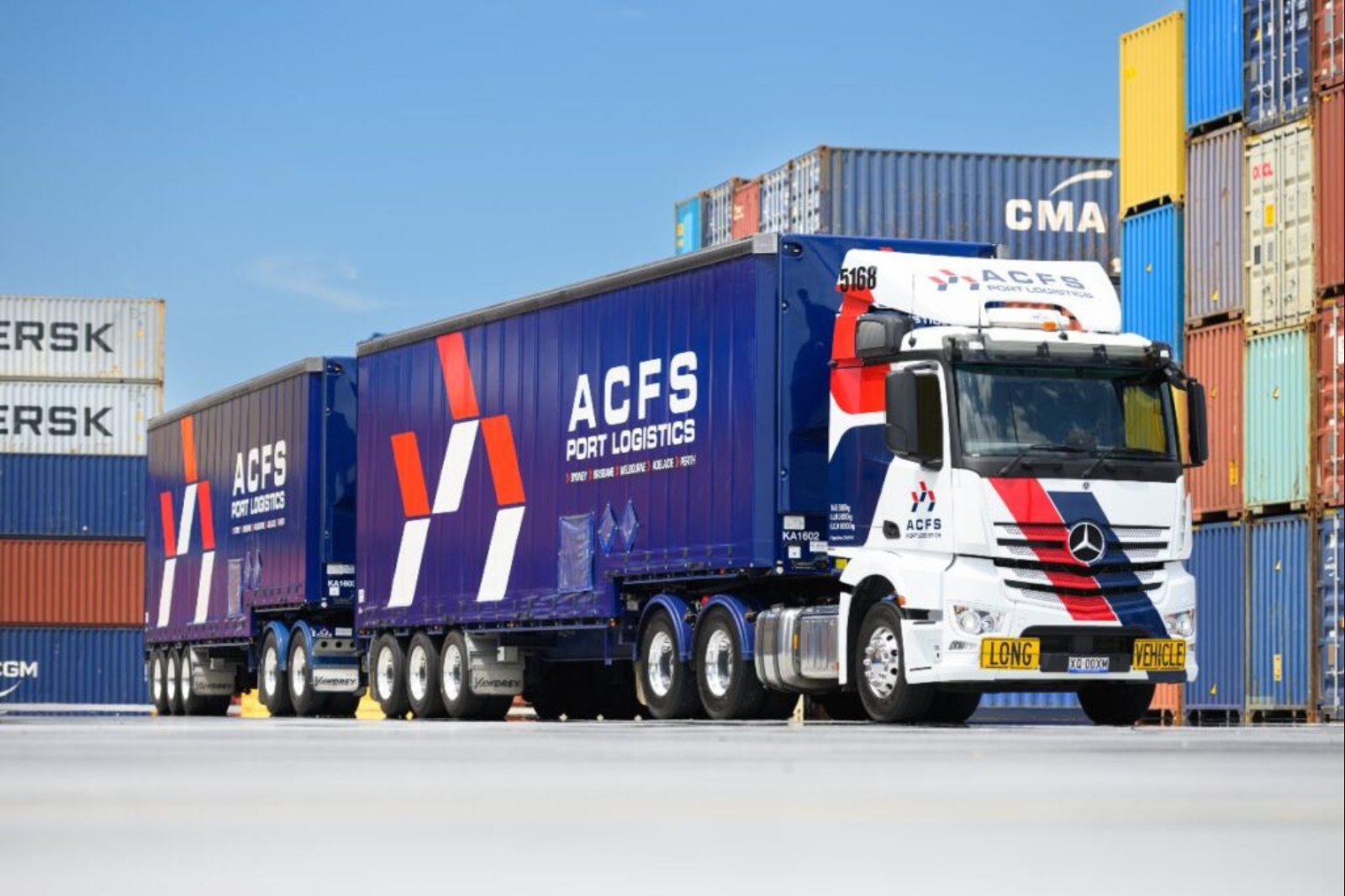
Start with the size, because it is the part the headlines get right. Founded in 2005 by Terry and Arthur Tzaneros out of Port Botany, ACFS grew into the largest privately owned container logistics operator in the country. Its network runs to more than 25 sites across Australia and New Zealand and better than a million square metres of yard and warehouse. It moves north of 850,000 laden import and export containers a year — some reports put it closer to 900,000 — behind a fleet of more than 300 trucks and 1,100 trailers, employing over 1,500 people across Sydney, Melbourne, Brisbane, Adelaide and Perth. Road, rail, warehousing and empty-container depots; Coles, Bunnings, Kmart, Big W and Officeworks on the customer list. Its last reported revenue sat around $479 million. This is not a small operator that stumbled. It is one of the pillars of the national container task.
How the Ground Gave Way
The proximate cause is easy to state: the business was placed under pressure it could not clear in time. The Australian Taxation Office moved to wind ACFS up over roughly $60 million in unpaid liabilities, commencing proceedings on 19 June, with the matter listed for the Federal Court on 7 August. ACFS had said it was working to settle the amount, but events moved faster than those efforts. On 6 August, secured lender ScotPac acted, receivers from BDO were appointed, and the directors themselves moved the group into administration with Salea Advisory — a responsible step when a board judges it needs room to protect the business and its people. That intervention came just before the scheduled hearing, which has since been adjourned to 21 August, with other creditors now joined to it. The tax position was not the only strain. The most recent accounts showed a statutory net loss of $26.7 million on that near-$479 million of revenue, and behind them sat a run of registered payment defaults, earlier wind-up threats from creditors, and a separate winding-up application tied to a logistics property trust. Chief executive Arthur Tzaneros has said the underlying business was trading profitably when administrators were appointed, that the ACFS team remains in place, and that he is cooperating fully with the process — and on the operational evidence, there is a genuine business here worth preserving.
The Economics Underneath
For our members the more important story is structural, not personal. Container logistics is a high-volume, low-value-per-box business, and that shapes everything. Margins are thin by design, and a great deal of the cost base is not yours to control — port charges, tolls, and above all the cost of storing empty containers, which by some accounts has climbed roughly tenfold. Operators who don’t own their own container parks pay those fees to whoever does, right across the network. ACFS, for all its scale, owned only two such facilities, which left it exposed to precisely the charges that have been rising fastest. Scale cuts both ways here: it wins the big contracts, but it also multiplies every cost you cannot pass on. The lesson worth carrying out of this is an old one, told at unusual size — revenue is not resilience. A near-half-billion-dollar business can still be a fragile one if the margin is wrong and the exposures sit outside its control.
The Ripple Through the Network
A collapse of this size is never contained to one balance sheet. The receivers have made clear they intend to run a sale campaign, taking the business and its assets to the market as a going concern rather than breaking them up; the first meeting of creditors is set for 18 August, with the group’s future — a trade sale, a deed of company arrangement, or, failing those, liquidation — to be settled after that. In the meantime the exposure fans out: the retailers whose freight ACFS carries, the subcontractors and owner-drivers who carry it for them, the suppliers now on the creditor list, the ports and depots that plug into the network, and more than 1,500 people wondering about their jobs. The near-term operational risk is real — industry voices have already flagged the prospect of truck queues at the capital-city ports and of shipping lines steering boxes away from affected sites — and competitors such as Qube have signalled they stand ready to take on ACFS customers if needed. There is one reassuring wrinkle: the empty-container depots are leased through separate entities outside the administration, so that part of the operation should keep running. But the broader point stands. When a node this large wobbles, the whole network feels it, and every operator who touched ACFS is now re-checking their own counterparty risk.
The Final Word
None of us should take any satisfaction in this. ACFS built something genuinely large and employed a lot of good people, and the sector is smaller for its trouble. But the collapse is a prompt as much as a headline. The container trade is bigger and more brittle than it looks from the outside: run on thin margins and weighed down by costs set well beyond any one operator’s control. If a business of this scale and standing can be caught out by it, none of us can afford to assume we are immune. The operators who come through the next few years will be the ones watching cost-to-serve as closely as revenue, owning or hedging the exposures that matter, and treating a strong top line as a starting point rather than a shield. The country will read this as one big company’s bad run. We know it for what it is — a lesson written in our own language, about the job we all do. As always, that job is ours.
Sources
Australian Financial Review, “Billionaire-owned logistics giant ACFS collapses into administration” (6 August 2026) and “Billionaire Tzaneros family’s ACFS Port Logistics to hit the auction block” (7 August 2026); Fully Loaded, “ACFS Port Logistics CEO moves to reassure customers and staff” and “Port logistics giant ACFS enters external administration” (7–8 August 2026); Big Rigs, “ACFS boss says business was operating profitably” (8 August 2026); Trailer Magazine and Prime Mover Magazine, “ACFS Port Logistics enters/falls into administration” (early August 2026); Splash247, “Australia’s ACFS Port Logistics enters administration”; Insolvency Insider Australia, “ACFS Port Logistics enters administration as BDO receivers pursue sale”; The Daily Cargo News, “ACFS insolvency issues create confusion and supply chain risk”; ChannelNews, “Key supplier and retail partner placed into administration owing millions”; company statement at ACFS Port Logistics administration updates (acfs.com.au); and IBISWorld enterprise profile. Key figures: entered administration 6 August 2026; administrators Jessica Perri, Anthony Elkerton and Sule Arnautovic (Salea Advisory) over ACFS Port Logistics Pty Ltd, ACFS Investments 1 Pty Ltd and TZI 1 Pty Ltd; receivers and managers Andrew Sallway and Duncan Clubb (BDO), appointed by ScotPac, over the companies excluding TZI 1; ATO winding-up application of roughly $60 million, commenced 19 June 2026, with the Federal Court hearing listed for 7 August now adjourned to 21 August 2026 and other creditors joined; receivers indicating they will run a sale campaign for the business and assets as a going concern, with logistics operator Qube publicly signalling readiness to take on customers and the Container Transport Alliance Australia warning of possible port truck queues; a separate winding-up application tied to a logistics property trust (Evolution MIT Services); most recent accounts of about $479 million revenue and a $26.7 million statutory net loss (financial year ended June 2024); more than 850,000–900,000 TEU handled a year; 25-plus sites across Australia and New Zealand and over one million square metres; 300-plus trucks and 1,100-plus trailers; more than 1,500 employees; customers including Coles, Bunnings, Kmart, Big W and Officeworks; founded in 2005 by Terry and Arthur Tzaneros; Tzaneros family wealth estimated near $1.6 billion (AFR Rich List); empty-container storage costs reported up roughly tenfold, with ACFS owning only two container-park facilities; first meeting of creditors 18 August 2026.
View Similar Blogs

ASCLA Mag September 2026
The September 2026 edition of ASCLA Mag explores how sustainability is becoming a practical business advantage across Australasia’s supply chain and logistics industry. As AI, data and operational innovation reshape how goods are planned, moved and delivered, this edition examines the strategies helping organisations reduce waste, improve efficiency, strengthen freight resilience and build the workforce…

Data Centres and the Squeeze on Logistics Land
By Steven Ballerini | CEO of Australasian Supply Chain & Logistics Association (ASCLA) For most of the past decade, the competition for industrial land on the fringes of Sydney and Melbourne was a contest between logistics operators, manufacturers and the developers who built for them. That contest has acquired a new and considerably better-funded participant.…
Celebrating an Industry That Rarely Celebrates Itself
By Steven Ballerini | CEO of Australasian Supply Chain & Logistics Association (ASCLA) On Friday 23 October the industry will gather at Brisbane City Hall for the ASCLA Industry Awards, and for the first time in more than six decades of the awards the night will be held in Brisbane. Six decades is a long…