

Sixteen Cents: What the 3 August Fuel Reset Means for Supply Chains
By Steven Ballerini | CEO of Australasian Supply Chain & Logistics Association (ASCLA)
On Monday 3 August, the emergency fuel settings that have carried the freight task through the past five months come to an end. Fuel excise returns from 36.6 cents per litre to 52.6 cents. The Heavy Vehicle Road User Charge returns from 16.4 cents to 32.4 cents. Both moves land on the same day, and both were legislated as a taper rather than a cliff.
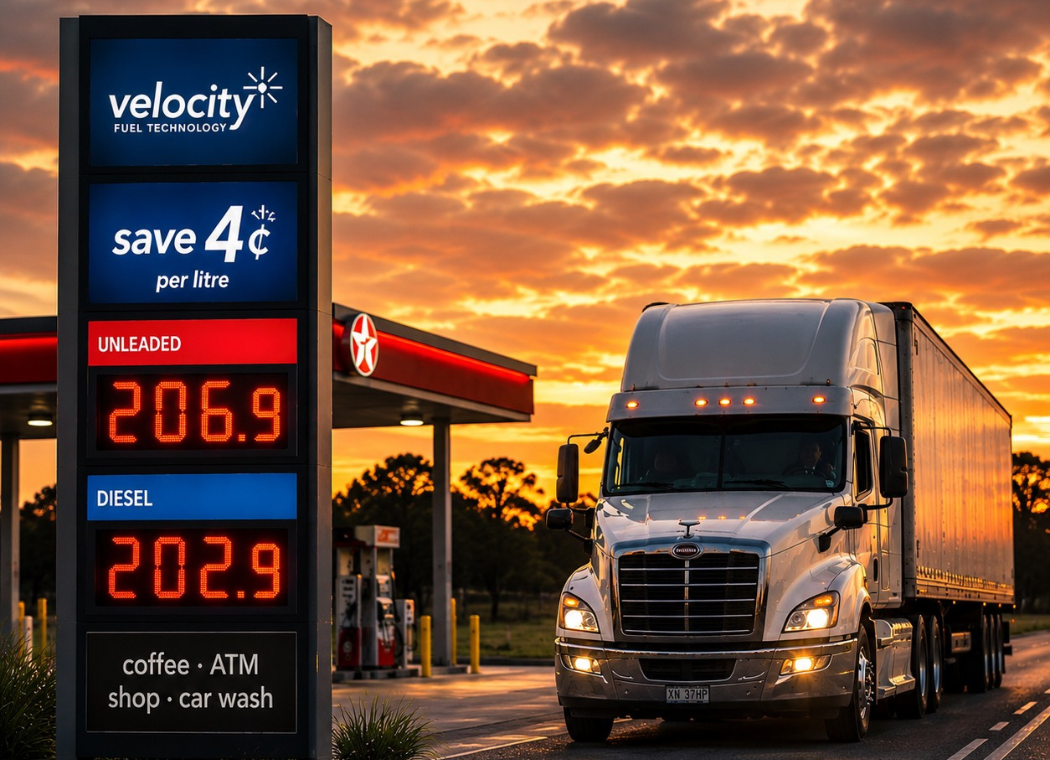
Most of the coverage will treat this as a motorist story, framed around the price on the board at the servo. For our sector it is something else entirely. It is a step change in the landed cost of every tonne-kilometre moved by road in this country, arriving at the precise moment that global fuel markets have turned against us again.
There are two numbers that matter here, and neither of them is the headline excise rate.
What Actually Changes
The first number is the fuel tax credit. For on-road heavy vehicle operators, the credit claimable through the business activity statement is the excise rate less the Road User Charge. Because excise and the RUC are both rising by sixteen cents on 3 August, that credit does not move. It has been reported at around 20.2 cents per litre through July, and it will remain at around 20.2 cents per litre from August.
The practical consequence deserves to be stated plainly. Heavy vehicle operators do not receive an offsetting increase in their credit to cushion the increase at the pump. The full sixteen cents lands on the cost base and stays there. Operators who have been mentally netting the excise rise against a larger credit are going to be unpleasantly surprised when the August BAS is prepared.
The second number is timing. This is the third change to fuel taxation settings in five months, following the emergency relief package agreed by National Cabinet on 30 March and the partial extension announced in late June. Each has been decided close to the deadline. Each has required operators, customers and finance teams to reprice at short notice.
The Backdrop Is Deteriorating, Not Improving
The relief measures were designed to taper as conditions normalised. Conditions have not normalised. Brent crude was trading around US$92 a barrel on 22 July as United States strikes on Iran continued into a second week and supply disruption fears returned to the market. Iran-aligned Houthi forces have threatened vessels carrying Saudi crude through the Bab el-Mandeb Strait and declared a naval blockade of Saudi Arabia, with three tankers bound for China and India reported to have turned back toward the Suez Canal. The Strait of Hormuz remains effectively closed to container shipping.
The flow-through to Australian diesel has been rapid. National average diesel prices have climbed back above $2.00 per litre for the first time since May, rising more than forty cents per litre during July alone. The National Road Transport Association calculates that once the full Road User Charge returns, truck operators will be paying roughly thirty-one per cent more for diesel than they were before the conflict began.
When the Treasurer introduced the second extension bill in June, he told Parliament the country needed the Strait of Hormuz opened and kept open, adding that “We cannot afford another false dawn or another false start.” That sentence was written as an expression of hope. Five weeks later it reads as a description of what has actually occurred.
Where the Industry Has Landed
NatRoad has renewed its call for the Road User Charge to be returned to zero and held there until at least 1 January next year, arguing that the RUC is the only immediate lever available to government while global prices are set elsewhere. Chief Executive Warren Clark has made the sequencing argument directly: “When global conflict pushes diesel prices higher, trucking businesses wear the cost first,” with the cost then passing to consumers through groceries, medicines and everyday essentials.
The Australian Trucking Association welcomed the July extension when it was announced, having argued alongside NatRoad that an abrupt return to full rates at the end of the financial year would have been unmanageable for smaller operators. The Prime Minister described the halved extension as the sensible thing to do, and the Government has not ruled out further support if international conditions deteriorate. As of this week, no further extension has been announced.
Members should plan for 3 August as the operative date, while building enough flexibility to absorb a late reprieve. That has been the pattern twice already.
The Obligation Most Shippers Have Not Read
This is the part of the story that belongs to ASCLA members rather than to the trucking associations, and it is consistently underestimated.
On 20 April, an Expert Panel of the Fair Work Commission comprising President Justice Hatcher and Vice Presidents Asbury and Gibian made the Road Transport Contractual Chain Order – Fuel Cost Recovery – 2026, on an application by the Transport Workers’ Union and the Australian Road Transport Industrial Organization. It commenced the following day under the expedited emergency powers created by the Fair Work Amendment (Fairer Fuel) Act 2026. Corrs Chambers Westgarth described the order as “a historic intrusion into contractual arrangements,” and that is not an overstatement.
The order requires parties across road transport contractual chains to adjust payment rates so that increases in the cost of fuel are actually recovered by the operators performing the work. The increase is measured against the cost of fuel as it stood on or before 6 March 2026. Critically, the obligation does not sit only with transport businesses. The Fair Work Ombudsman identifies manufacturers and suppliers, large retailers and construction companies as examples of parties to whom the obligation to increase rates applies. A great many ASCLA members are primary or secondary parties in a chain, not merely customers of one.
Contravention is a civil remedy provision under the Fair Work Act, with maximum penalties currently at $19,800 for an individual and $99,000 for a corporation, alongside the court’s power to order compensation. Existing arrangements can satisfy the order — a properly drafted rise-and-fall clause or fuel levy will generally do the job — but only if the mechanism actually tracks the increase rather than sitting dormant against a stale baseline.
The order continues until it is varied or revoked, or until the weekly average national terminal gate price for diesel reported by the Australian Institute of Petroleum falls below $2.00 per litre. For context, that measure sat at $1.654 per litre on 27 February and had reached $3.160 by 27 March. With retail diesel back above $2.00 nationally, nobody should be planning on the order lapsing. It is reviewed every three months, and the first review surfaced substantial industry concern about how workable the definitions of primary and secondary party really are in complex supply arrangements.
What It Means for Supply Chain Leaders
Five practical actions before month end.
Confirm whether you are a party to the order, not just affected by it. If your organisation contracts for road transport — directly, or through a 3PL, broker or digital platform — you may be a primary or secondary party carrying an active legal obligation. This is a legal question specific to your contracting structure, and it warrants advice rather than assumption.
Test your fuel recovery mechanism against the order, not against habit. Many fuel levies were designed for ordinary volatility, with monthly or quarterly resets and lagging index references. A mechanism that recovers sixteen cents in November does not satisfy an obligation that bites in August.
Model the credit, not just the bowser price. Because the fuel tax credit is static across this change, the sixteen cents is a real and permanent addition to operating cost for road freight. Whether a tax-driven increase constitutes a qualifying fuel cost increase under the order is exactly the kind of question to put to your advisers now rather than in September.
Re-run your cost-to-serve, not just your freight rates. A linehaul operation consuming one million litres of diesel a year is looking at roughly $160,000 in additional annual cost from this change alone, before any movement in the underlying commodity price. Multiply that across a network and it stops being a procurement conversation and becomes a network design conversation.
Build both scenarios and decide now which one you default to. Relief has been extended twice at short notice, and the Government has left the door open. Have the repricing communication drafted for 3 August and hold it. The cost of being ready and not needing it is close to zero; the cost of the reverse is a month of unrecovered margin.
The Final Word
Fuel excise is a domestic policy lever aimed at an international problem, and the limits of that were always going to show eventually. Canberra can set the tax. It cannot open the Strait of Hormuz, restrain the Houthis or move the Brent curve. What it can do is choose the timing of its own increases, and the industry’s argument this week is simply that adding sixteen cents of domestic tax while global markets are already pushing prices up is poor sequencing.
There is a more durable point underneath the immediate one. For five months, this sector has been forced to treat fuel as a genuine variable rather than a background assumption, and in doing so has rebuilt recovery mechanisms, contractual clauses and cost models that in many cases had not been examined since the last shock. That discipline is worth keeping regardless of what happens on 3 August.
The operators and shippers who come through this with their margins intact will not be the ones who correctly predicted the Government’s decision. They will be the ones whose contracts already did the work.
Sources
NatRoad, media release, “Fuel prices surge again as NatRoad urges Government to drop Road User Charge back to zero,” 21 July 2026 (3 August rates for fuel excise and Road User Charge; national average diesel above $2.00 per litre and up more than 40 cents per litre in July; call for RUC to return to zero until at least 1 January; approximately 31 per cent increase on pre-conflict diesel costs; Warren Clark quotation); Big Rigs, “NatRoad urges government to reset RUC to zero,” 22 July 2026 (fuel tax credit rate unchanged at 20.2 cents per litre); Prime Mover Magazine, “NatRoad renews fuel tax call,” July 2026, and “ATA welcomes fuel tax relief measures extension,” 22 June 2026 (Australian Trucking Association position; ATA CEO Mathew Munro); Department of Infrastructure, Transport, Regional Development, Communications, Sport and the Arts, “Fact sheet: fuel price relief measures from 1 July 2026” (excise and RUC rates for July and return to pre-conflict rates from 3 August); Prime Minister of Australia, media releases, “Fuel excise halved for three months,” 30 March 2026, and “Additional fuel excise relief for the month of July,” 21 June 2026 (National Cabinet emergency package; extension of relief; supporting measures); Treasury Ministers, second reading speech, Treasury Laws Amendment (Fuel Excise Relief No. 2) Bill 2026, 22 June 2026 (Treasurer Jim Chalmers quotation); SBS News, “The fuel excise cut has been extended,” June 2026 (Prime Minister’s characterisation of the step-down); Fair Work Commission, “Road transport contractual chain order issued,” 20 April 2026, and major case page MS2026/1 (Expert Panel composition; TWU and ARTIO application; commencement 21 April 2026; review cycle); Fair Work Ombudsman, “Fuel cost recovery: Road transport order issued” (application to manufacturers, suppliers, large retailers and construction companies; existing rise-and-fall arrangements); Corrs Chambers Westgarth, “FWC’s road transport contractual chain order: a guide to new fuel cost recovery obligations,” April 2026; Colin Biggers & Paisley, “Passing on fuel costs,” May 2026 (6 March 2026 baseline; cessation trigger tied to the Australian Institute of Petroleum weekly national terminal gate diesel price below $2.00 per litre; terminal gate price of $1.654 on 27 February and $3.160 on 27 March 2026); Herbert Smith Freehills Kramer, April 2026 (maximum penalties of $19,800 for an individual and $99,000 for a corporation); MinterEllison, “Fuel Cost Recovery Order: First review insights and current status,” 2026 (scope and primary/secondary party concerns raised at the first review); HDFC Sky market report, 22 July 2026 (Brent crude near US$92; Houthi threats in the Bab el-Mandeb Strait; tankers diverting toward the Suez Canal); Freightos, “Hormuz closure pushing fuel costs back up,” 14 July 2026 (Strait of Hormuz status and bunker cost pressure). This article is general information only and does not constitute legal, tax or financial advice.
View Similar Blogs
ASCLA Mag September 2026
The September 2026 edition of ASCLA Mag explores how sustainability is becoming a practical business advantage across Australasia’s supply chain and logistics industry. As AI, data and operational innovation reshape how goods are planned, moved and delivered, this edition examines the strategies helping organisations reduce waste, improve efficiency, strengthen freight resilience and build the workforce…

Data Centres and the Squeeze on Logistics Land
By Steven Ballerini | CEO of Australasian Supply Chain & Logistics Association (ASCLA) For most of the past decade, the competition for industrial land on the fringes of Sydney and Melbourne was a contest between logistics operators, manufacturers and the developers who built for them. That contest has acquired a new and considerably better-funded participant.…
Celebrating an Industry That Rarely Celebrates Itself
By Steven Ballerini | CEO of Australasian Supply Chain & Logistics Association (ASCLA) On Friday 23 October the industry will gather at Brisbane City Hall for the ASCLA Industry Awards, and for the first time in more than six decades of the awards the night will be held in Brisbane. Six decades is a long…